
Navigating AI and Copyright Infringement
Understanding AI and Copyright Infringement: Navigating the Legal Challenges of Generative Technology
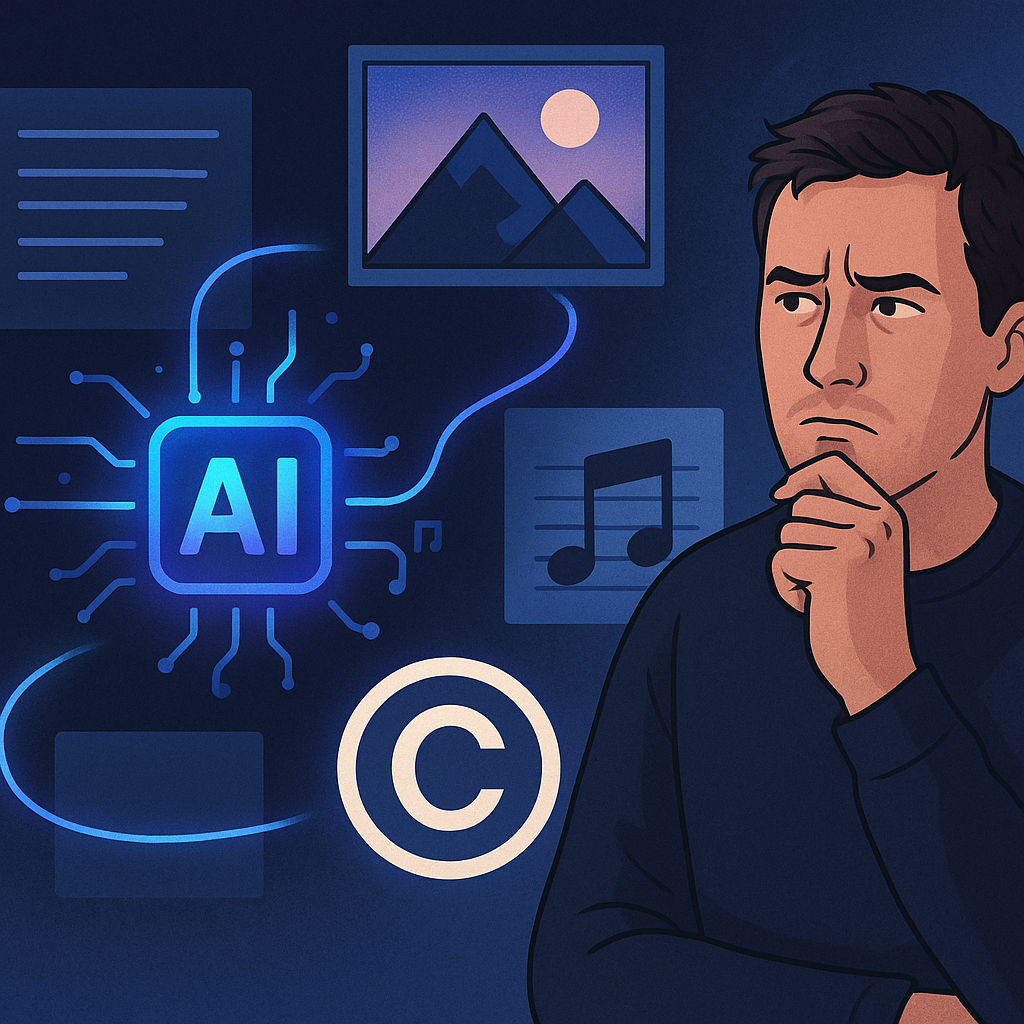
Artificial Intelligence (AI) has quickly evolved from a sci-fi concept to a key player in content creation. Generative AI models like GPT, DALL·E, and Stable Diffusion produce text, images, and music that often appear human-made. But this advancement raises important questions about ownership: who holds the rights to AI-generated content? And what happens if AI uses copyrighted material without authorization?
This article explores the complex legal issues surrounding AI and copyright infringement, breaking down key points for creators, developers, and users.
What Is Copyright Infringement?
Copyright grants creators exclusive rights to reproduce, distribute, display, or adapt their original works. Copyright infringement occurs when someone uses this protected work without permission. However, copyright laws were designed for human creators—not AI systems trained on vast data sourced from the internet. When AI generates content similar to copyrighted material, determining infringement becomes challenging.
Key Point: Copyright laws protect human creativity, but AI-generated content creates new complexities in defining ownership.
The Role of AI in Copyright Concerns
How Generative AI Uses Training Data
Generative AI models learn from massive datasets containing text, images, and code collected online. Much of this data may be copyrighted. While AI doesn’t typically copy content word-for-word, it identifies patterns and themes to create new works. Legal issues arise if AI outputs closely resemble existing copyrighted materials.
Examples of Potential Infringement
- Text: AI producing large portions of copyrighted books or articles verbatim.
- Images: AI-created visuals that closely imitate copyrighted photography or artwork.
- Music: AI-generated songs that replicate melodies or beats without authorization.
Key Point: Similarities between AI-generated content and copyrighted works can lead to infringement disputes.

Recent Legal and Industry Developments
Notable Lawsuits
- Getty Images vs. Stability AI: Getty alleges Stability AI used its copyrighted images without permission to train Stable Diffusion, potentially undermining Getty’s licensing business.
- Authors vs. AI Companies: Writers and publishers claim unauthorized use of their works during AI training and seek compensation or licenses.
Regulatory Responses
- US Copyright Office: Declared that works created solely by AI without human authorship are not eligible for copyright protection.
- European Union: Developing regulations to ensure transparency in AI training and protect creators’ rights.
- Industry Actions: Some AI companies now license data or allow content owners to opt out, aiming for fairer practices.
Key Point: Legal and regulatory frameworks are evolving but have yet to provide clear resolutions.

Key Legal Challenges
Ownership of AI-Generated Content
Since AI cannot hold copyrights, questions remain on whether ownership belongs to developers, users, or potentially no one. Laws vary by country, and no consensus exists.
Fair Use and AI Training
There is debate over whether training AI on copyrighted works qualifies as fair use due to its transformative nature. Courts have not issued definitive rulings.
Liability for Infringement
Determining responsibility when AI produces infringing content—be it developers, users, or others—is still unsettled.
Summary: Ownership, fair use, and liability are core legal issues in AI and copyright infringement.
Practical Advice for Creators, Developers, and Users
For AI Developers
- Use datasets with proper rights and permissions.
- Implement filters to detect potential infringement in outputs.
- Stay informed on rapidly changing laws.
For Content Creators
- Register copyrights to protect your work.
- Use monitoring tools to detect unauthorized AI use.
- Explore licensing agreements with AI companies.
For Users of AI-Generated Content
- Review terms of service carefully.
- Avoid monetizing content if infringement is uncertain.
- Credit original creators when possible.
Summary: Vigilance and informed choices help protect rights and reduce legal risks.
Case Study: Impact on the Creative Industry
Artists and creators report AI-generated imitations of their styles, leading to lost income and commissions. Unions and guilds advocate for transparency, fair compensation, and protections relevant to AI’s rise.
Insight: The creative community demands participation in AI policy decisions and safeguards.
The Future of AI and Copyright
- Laws will continue to adapt to AI’s challenges.
- Technological solutions like watermarking and provenance tracking could aid transparency.
- Collaborative licensing models may emerge to ensure fair payments for dataset contributors.
Summary: The future combines evolving law, technology, and cooperation to balance innovation with creator rights.
Understanding AI and copyright infringement requires navigating a complex, evolving landscape. Staying informed and making responsible choices benefits creators, developers, and users alike.
Create responsibly—and watch for AI that might borrow your style without permission.
Further Reading and Resources
- US Copyright Office Guidance on AI
- Getty Images vs. Stability AI Lawsuit Overview
- European Union Digital Services Act Information
Happy creating! 🎨🤖